Educational Story
How Tiny Wildlife Corridors Help Animals Survive in Growing Cities
Small green connections between parks and habitats can help birds, insects and other wildlife move through growing cities more safely.
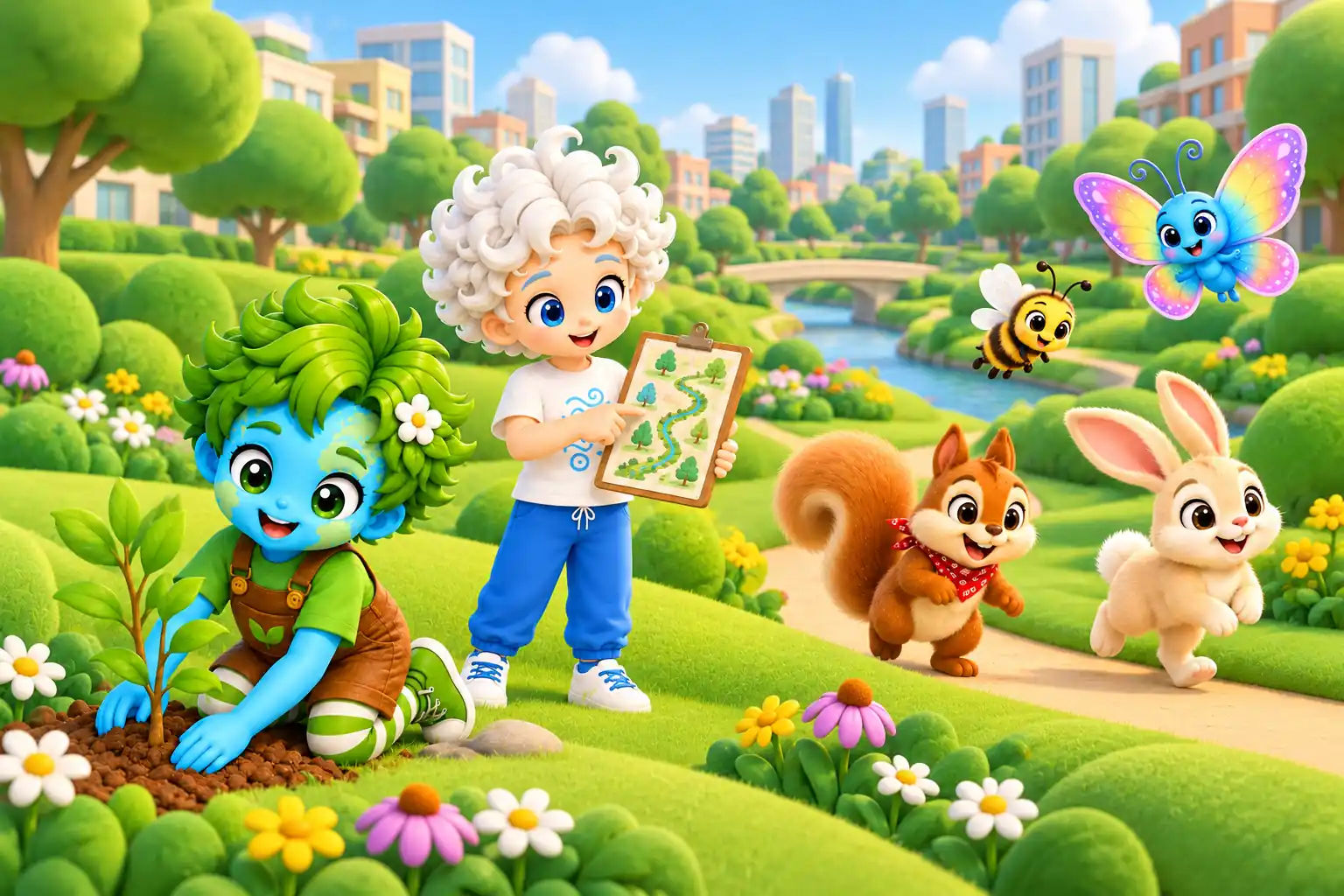
A city park can look like an island.
A city park can look like an island.
It may contain trees, flowers, insects and birds, while only a few streets away another green space supports similar life. For wildlife, however, the roads, buildings, walls and heavily developed areas between them can make travelling difficult.
This is where wildlife corridors can help.
A wildlife corridor is a connected or partly connected route that gives animals and other organisms a better chance of moving between habitats. Corridors can be large landscapes, but in cities they can also be surprisingly small.
Tree-lined streets, native hedges, riverbanks, connected gardens, vegetated railway edges, green roofs and patches of flowering plants can all contribute to a larger network.
These connections matter because wildlife rarely needs only one place.
Animals may move to find food, water, shelter or mates. Plants depend on insects, birds and other animals for pollination and seed movement. As seasons and local conditions change, species may also need access to different habitats.
Connectivity does not mean every green space must look wild. The goal is to think beyond isolated parks and consider how nature moves through the entire urban landscape.
Residents can contribute too. Planting native species, reducing unnecessary pesticide use, providing suitable flowering plants and creating small habitat features can make gardens and balconies useful stepping stones.
No single garden becomes a wildlife corridor by itself. But many small spaces, connected across a neighbourhood, can create something much larger than any one of them.
Cities will continue to grow. The challenge is not to choose between people and nature, but to design places where both have room to move, live and thrive.
More Stories
Continue exploring
 Community Story
How One Neighbourhood Brought a Forgotten Lake Back to Life
A neglected lake became a shared community project, bringing cleaner water, native plants, wildlife and people back together.
Read Story Personal Story
I Stopped Throwing Things Away—and Started Fixing Them
One broken appliance changed the way I looked at everyday objects—and turned repair, reuse and sharing into a habit.
Read Story Field Note
What We Found During a Morning Bird Survey by the River
A quiet morning beside the river showed how much we can learn by slowing down, observing carefully and recording the wildlife around us.
Read Story Article
How Greener Cities Can Make Everyday Life Better
Trees, parks, shade and connected green spaces can support cooler streets, wildlife, wellbeing and more welcoming neighbourhoods.
Read Story